

“But what do civil engineers actually do?”
It’s a question that doesn’t always have a clear answer for many, especially for students who haven’t had a lot of exposure to the field.
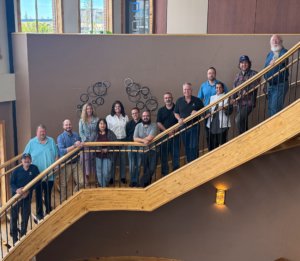
Programs like the ACE (Architecture, Construction, and Engineering) Mentor Program give students a chance to begin answering that question for themselves and exploring the many different paths in the AEC industry.
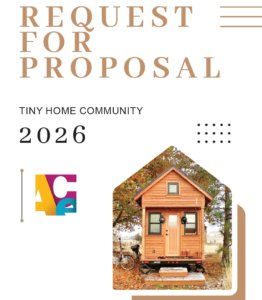 This is RICK Colorado’s first year participating in ACE, a mentorship program offered in high schools across the country. Students are guided in teams by architects, engineers, construction professionals, and tradespeople as they develop a mock design project over the course of the semester. This year, two members of RICK’s civil engineering team from the Arvada office are volunteering with students at Northglenn High School and Centaurus High School as they work on a mock design proposal for a tiny home community. Most teams meet for about two hours each week, and the semester concludes with a final presentation where teams present their design to their peers and mentors and share how their project came together.
Inside an ACE Session
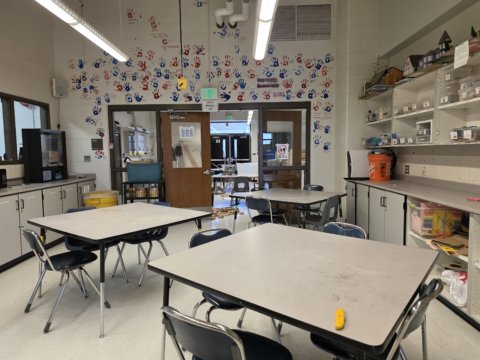
Each session typically begins with a guest speaker presentation, giving students exposure to different parts of the industry before they break into smaller groups to continue developing their projects. The most recent guest presentations have covered topics like structural engineering, interior building systems, estimating, and site layouts. From there, mentors walk around the different groups to discuss ideas and offer suggestions as students work through their designs in their teams. The students may work together in a lab or computer lab creating drawings, so the mentors divide up and rotate to make sure all groups are fully supported.
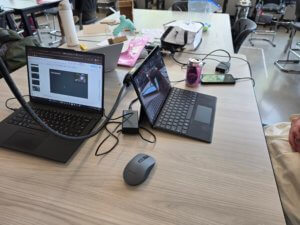
One mentor described the sessions as a mix of collaboration, problem solving, and figuring things out as a team. For example, after a presentation on cost estimating, students began discussing how they could find pricing for different parts of their project. Their mentors encouraged them to start requesting quotes from places like Home Depot and pointed them toward public databases with general cost information.
A mentor also reflected that one of her favorite moments so far came during her first ACE session, when students and mentors were given five unrelated items (a boxcar, a robot, a video game, an oven, and a shooting star) and asked to tie them together in a drawing.
“Very quickly, I learned that these kids are incredibly creative and so brilliant, and my little drawing was nothing compared to them. It made my heart very happy to watch them.”
Thinking Beyond the Surface
During class sessions, RICK’s civil mentors help students consider how a site functions beneath the surface. As one civil mentor from RICK explained, civil engineering often covers everything outside and beneath a building, from grading and drainage to utilities and infrastructure. Students have many creative ideas as they work through their designs and begin thinking about how their ideas would actually function on a real site.
“The students most often focus on the appearance of the building and where to place it. I encourage them to think more broadly about things like what utilities the building will need, how those utilities will be accessed, and how people will reach the building itself.”
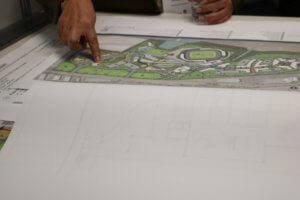
One of the biggest challenges for students is simply figuring out where to begin.
As one mentor explains, “Being asked to design a site, even with a list of requirements, can still feel vague. The next challenge is being realistic about what the students can accomplish within the given timeframe. They have some great ideas, but once they begin working through them, the scope can quickly become larger than expected.”
As the semester continues, students begin asking more technical questions and looking at parts of the project they may not have considered at the beginning. Mentors said those conversations are often where they begin to see students grow more confident and curious about the role engineering plays in a project.
“I’ve had students come over and ask questions about things like what kind of storms we design for and whether snow factors into those calculations. It’s always impressive to see what they already know and what they’re curious about.”
RICK’s civil mentors have been impressed by how quickly students begin teaching themselves new skills. One mentor shared that students in her group have spent much of the semester learning Revit software together, adding that in some cases, “the mentees are teaching the mentor.”
For mentors, the hope is students will walk away with a better understanding of how many different roles and specialties are part of a project.
“I always tell students that civil engineering is a broad field. If they enjoy figuring out how things fit together on a site, that’s one path. If they’re interested in traffic flow, water, or environmental systems, there are other directions they can explore.”
Looking Ahead
The semester will conclude with final presentations at the end of April, where student teams submit and present their projects. A scholarship fundraiser and social event will follow in June, where scholarships are awarded and students are recognized for their work.
For the mentors, presentations will be an opportunity to see how much the students have learned over the course of the semester and to see the growth in them from the beginning of the semester to the end.
One RICK mentor expressed how excited she is for the June fundraiser because it gives her a chance to see how she can become even more involved next year. At the school where she volunteers, students have won the competition in previous years, received scholarships, and had opportunities for internships and beyond. She is looking forward to seeing students recognized for their work and hearing them talk about the parts of the project they were most excited about.
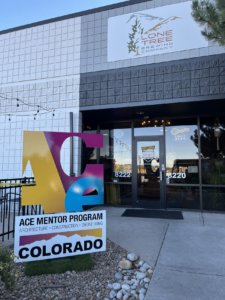
For students who may still be figuring out what they are interested in and what comes next after high school, programs like ACE can make careers in the industry feel more approachable and less overwhelming. Students have the opportunity to spend time around people already working in the industry, and see in real time how their ideas can move from drawings and conversations to a finished design.
The ACE students this semester have made a strong impression on their mentors. Their questions are thoughtful and they have been willing to jump into anything and explore brand new ideas. They are collaborative, curious, and genuinely excited to learn from their mentors and guest speakers.
RICK Colorado is proud to be involved with ACE and looks forward to continuing to support this incredible mentorship program in the future.